Most Common Types of Sewage Treatment Plants (STP)
Sewage Treatment Plants are designed to remove contaminants and pollutants from wastewater and make treated water suitable for safe reuse in various non-potable applications.
What is a Sewage Treatment Plant?
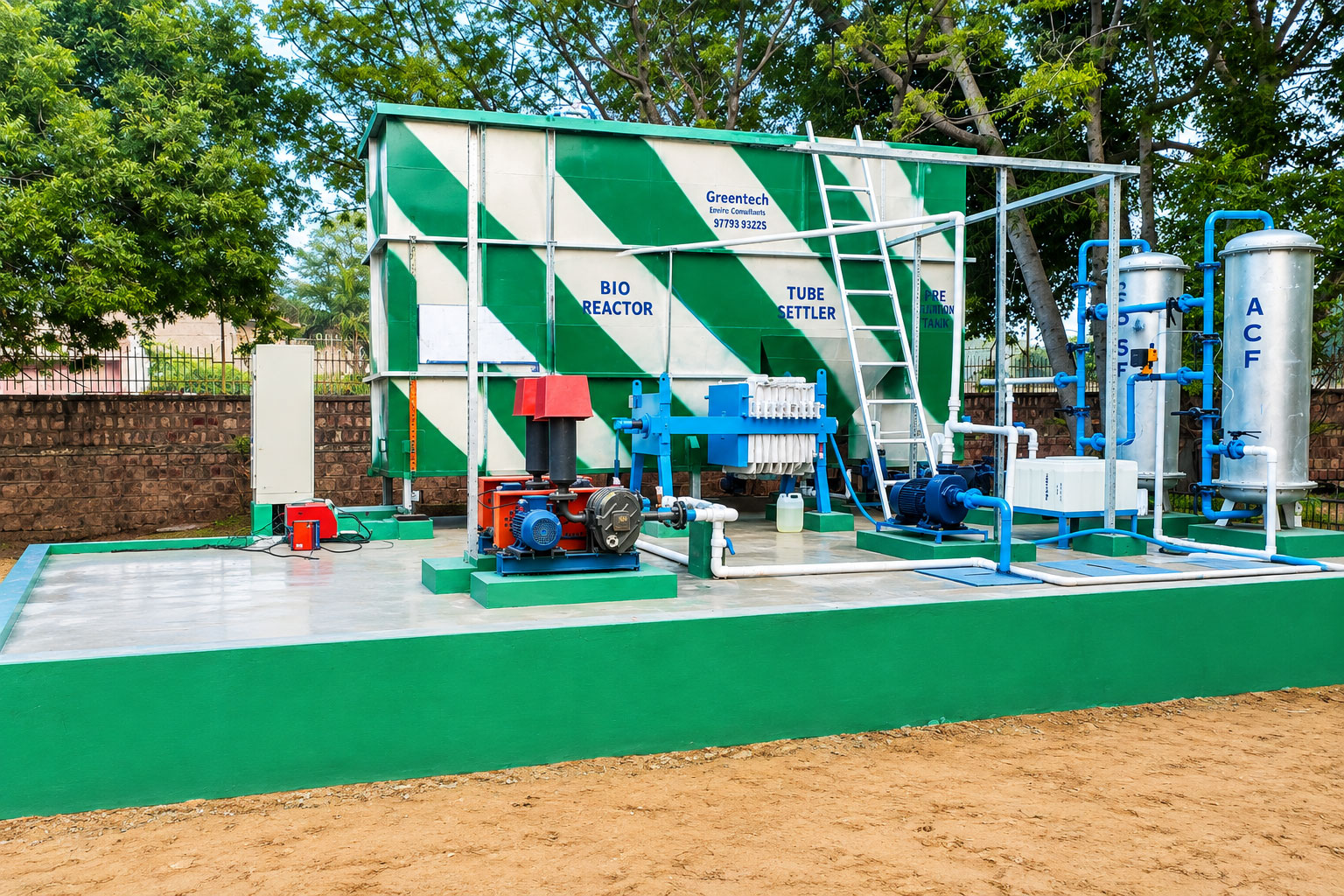
An STP is a wastewater treatment system used to reduce suspended solids, organic matter and other pollutants present in sewage. Treated water can be reused for gardening, irrigation, flushing and other suitable purposes.
Common STP Treatment Technologies
Activated Sludge Process
Biological treatment technology used to remove biodegradable organic matter from sewage.
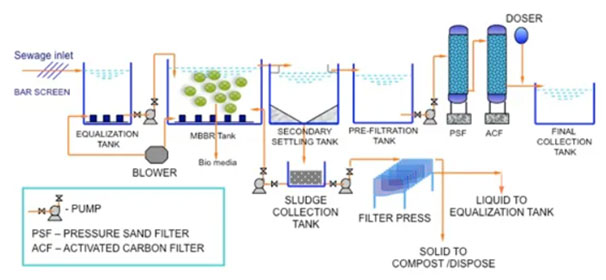
Moving Bed Biofilm Reactor
MBBR uses biofilm carriers to provide efficient biological treatment within a compact system.
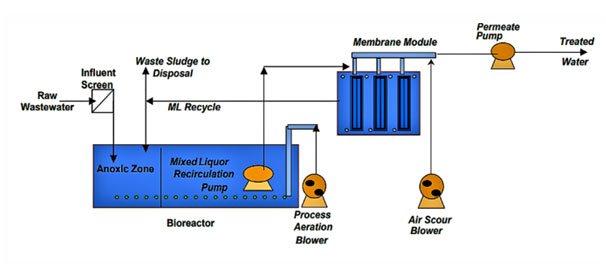
Membrane Bioreactor
MBR combines biological treatment with membrane filtration to produce high-quality treated water.
Electrocoagulation System
An electrochemical treatment method that assists in removing suspended and dissolved contaminants.
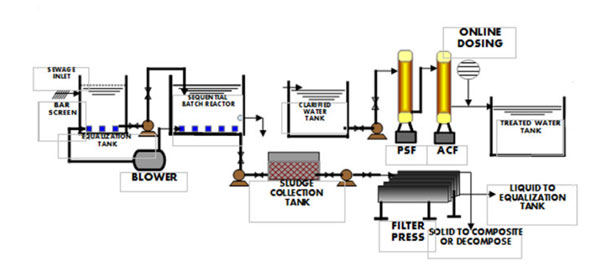
Sequential Batch Reactor
SBR is an activated sludge process in which treatment stages such as aeration, settling and decanting occur sequentially.
Rotating Biological Contactor
RBC uses rotating media to support microorganisms for biological wastewater treatment.
SBR – Sequential Batch Reactor
Sequential Batch Reactor is a biological wastewater treatment process based on the activated sludge principle. Oxygen is supplied during the aeration stage, allowing microorganisms to break down biodegradable organic pollutants.
MBR and SBR sewage water treatment systems are type of activated sludge process. But when we talk about differences – the method used in both the processes to separate the liquid from the treated wastewater is different. The technology used by SBR is phase separation that is gravity setting method, while MBR uses the membrane – and the use of a physical barrier for separation gives more importance to this process as it increases the advantages.
The other difference is the ability of the sewage treatment plants to operate at high biomass concentrations for mixed liquor suspended solids (MLSS). The MBR treatment plant is considered to overpower others here as it operates at an MLSS of around 12,000 mg/l. On the other hand, the SBR treatment plan works at 3,000 mg/l. Advantages that MBR provides because of this is it takes smaller process basins as compared to others – overall resulting in smaller plant footprint (around 50-70%) as compared to SBR process.
Less turbidity is a sign of clean water. MBR has less than 0.2 NTU effluent turbidity – Another benefit that MBR provides. It reduces the burden on the ultimate disinfection system. At the time of operation, the membrane opening is less than 0.1μm – and without dis-infection it has the capacity to achieve 6-log dismissal of bacteria and 3-log of virus. SBR system cannot get values this low. Here, the usual membrane opening is 10μm which is quite large.
MBR requires less involvement of the operators as the process is quite easy. Many of the plants require operators to keep an eye on the task of settling characteristics of the sludge – keeping in mind all the factors involved here. along with the analysis, adjustments have to be made to keep it settled. Lack in this process can affect the effluent quality.
Other difference is the amount of waste sludge produced by the plants. Again, because of the ability to operate at much higher sludge retention time, the MBR system tops the chart with lesser waste sludge than SBR.
When we talk about the MBBR process – it requires less space than the activated sludge systems because of the concentrated biomass. Moreover, the efficiency of the system is less dependent on the final sludge separation. Unlike activated sludge systems, MBBR does not require recycling of the sludge. Other advantages include – high effective sludge retention time and lower sludge production.
We see some difference in the treatment plants. However, if there are no restrictions on the footprints and a project doesn’t require any reuse – SBR is a good system. It is cost-effective and takes care of the process required. On the other hand, for reduced footprint and higher quality effluent, MBR is considered the better choice. While MBBR is also a consideration for many municipal and industrial waste-water treatment processes.